Emergency Department / Urgent Care Visit
Patient Name: Rachel T.
Date of Birth: [Redacted]
Age: 30
Sex: Female
Date of Visit: [Approx. 12–14 months prior to current visit]
Location: Emergency Department / Urgent Care
Chief Complaint
Right index finger pain and swelling after injury.
History of Present Illness
Rachel T. is a 30-year-old female who presents with pain, swelling, and limited movement
of her right pointer (index) finger following an injury that occurred earlier in the day.
The patient reports that her finger was injured at home but provides limited details about
the mechanism, stating only that it was “bent the wrong way.”
Pain is localized to the proximal portion of the index finger and is described as sharp and
aching, rated 5–6/10. Pain is worsened with movement or attempts to grip objects. Patient
delayed seeking care, hoping the pain would improve on its own.
Past Medical History
Past Surgical History
Medications
Allergies
Social History
- Lives with partner
- Right-hand dominant
- Denies tobacco and illicit drug use
- Occasional alcohol use
Review of Systems
- Positive for finger pain, swelling, and stiffness
- Negative for numbness or tingling
- No other injuries reported
Physical Examination
- General: Alert, anxious appearing female, cooperative but guarded
- Right Hand / Index Finger:
- Swelling and tenderness over the proximal phalanx of the index finger
- Mild bruising noted
- Decreased range of motion secondary to pain
- No open wounds or deformity
- Sensation intact, capillary refill < 2 seconds
Imaging
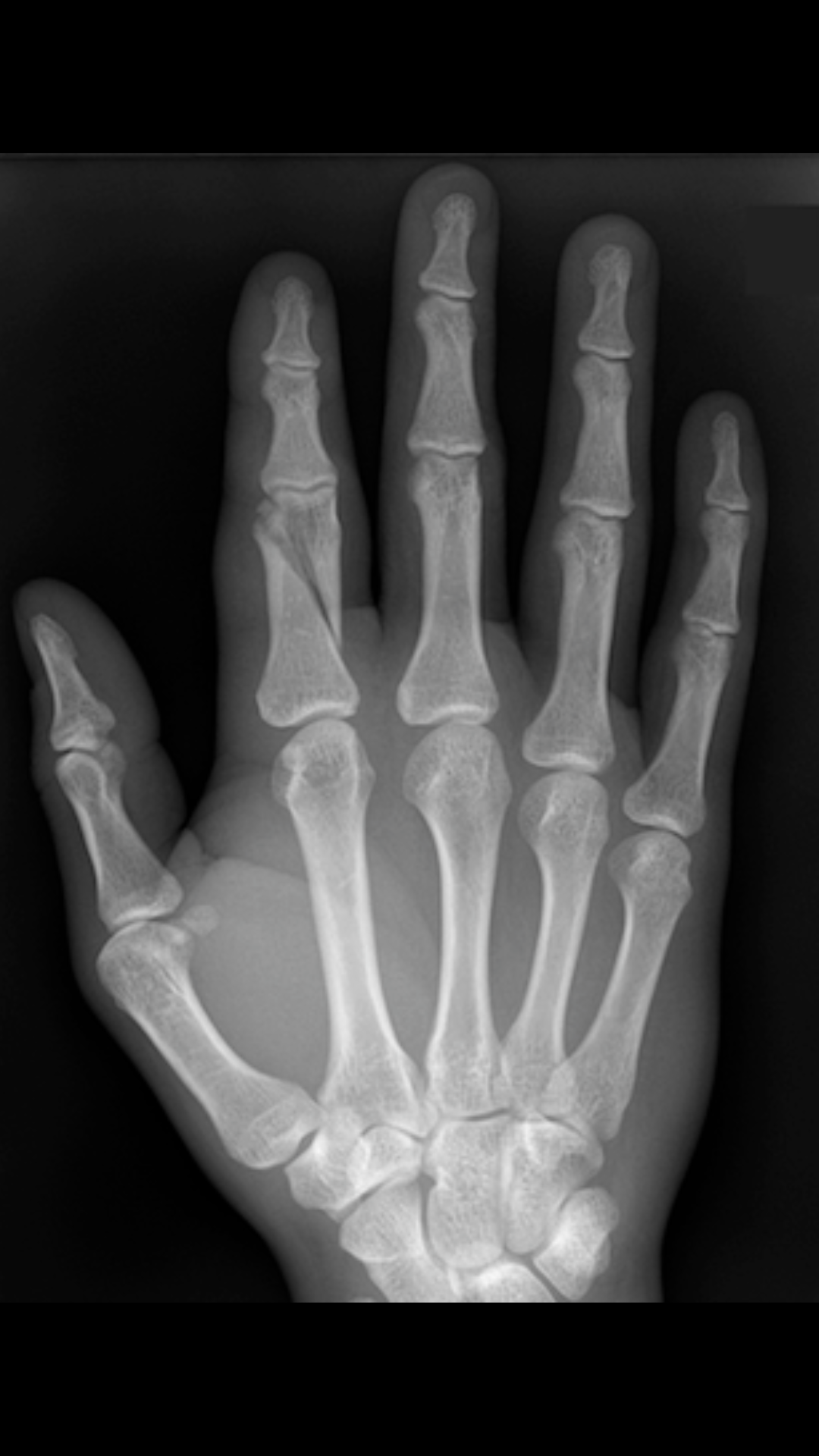
- X-ray of right hand:
- Fracture of the proximal phalanx of the index finger with mild displacement
- No intra-articular extension
- No additional fractures identified
Assessment
- Closed fracture of the proximal phalanx of the right index finger
Plan
- Finger splint applied for immobilization
- Pain control with acetaminophen; advised limited NSAID use
- Ice and elevation recommended
- Orthopedic or hand specialist follow-up advised within 7–10 days
- Return precautions reviewed (increasing pain, numbness, discoloration)
Disposition
Discharged home in stable condition.
Provider Notes
Patient was hesitant when asked to describe the mechanism of injury and provided minimal
detail. Injury pattern documented. Patient declined further discussion and expressed desire
to return home promptly.